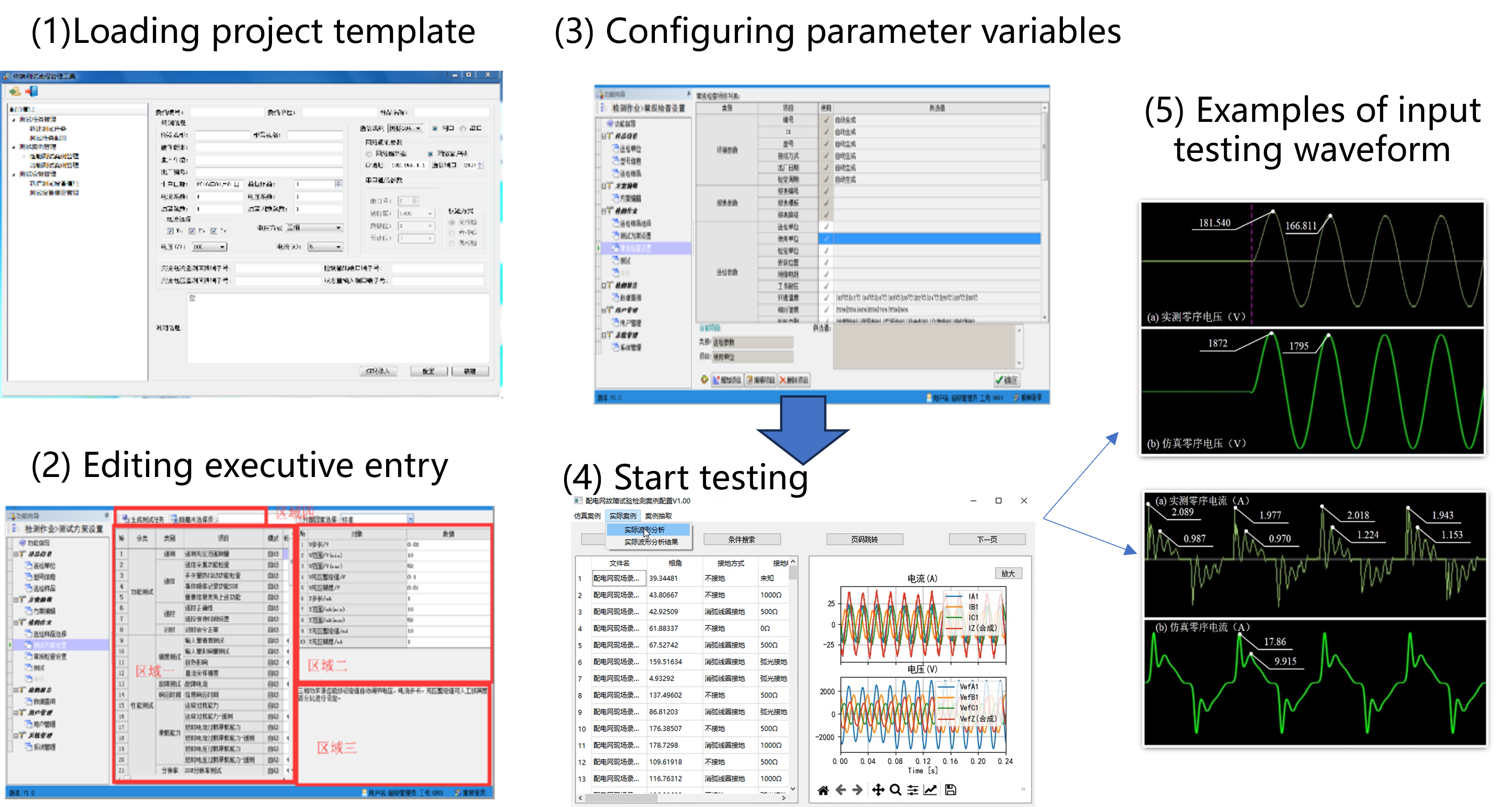
DTU is installed at various measurement points in the distribution network, completing functions such as data collection, fault identification, power restoration, and status monitoring, etc. It is the core equipment of the intelligent distribution network.
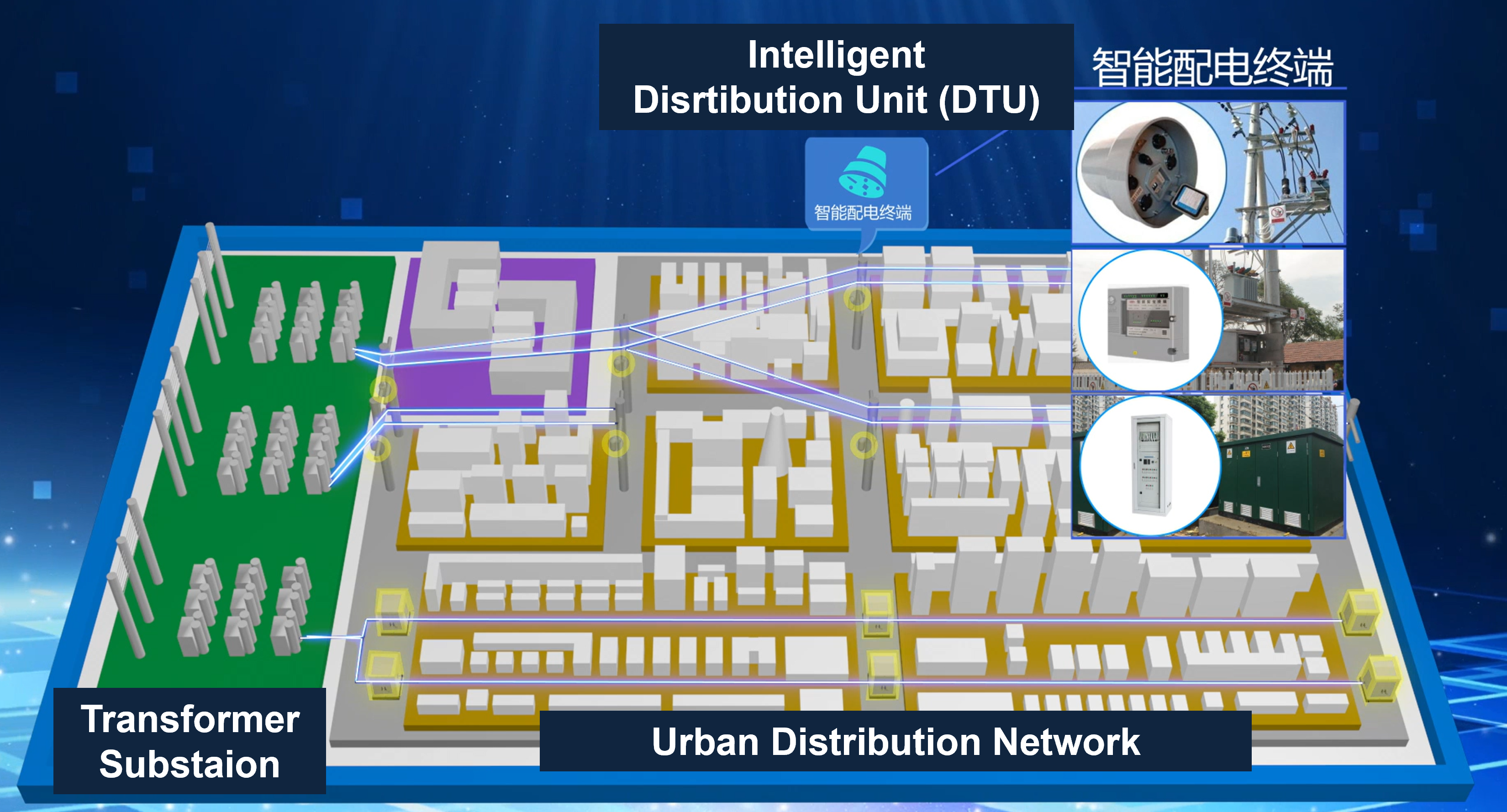
The DTU Full-Scenario Automatic Testing Platform based on transient high-power sources and integrated RLC devices, utilizes a standardized flexible compilation system to compile nearly a hundred testing cases. It achieves dynamic simulation of real distribution master station, transmission lines, power loads, disturbance factors, and measuring devices, as well as the equivalent reproduction of typical faults (short circuit, grounding faults).
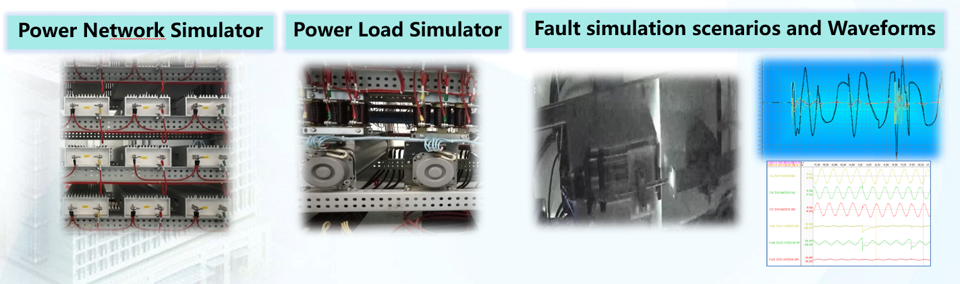
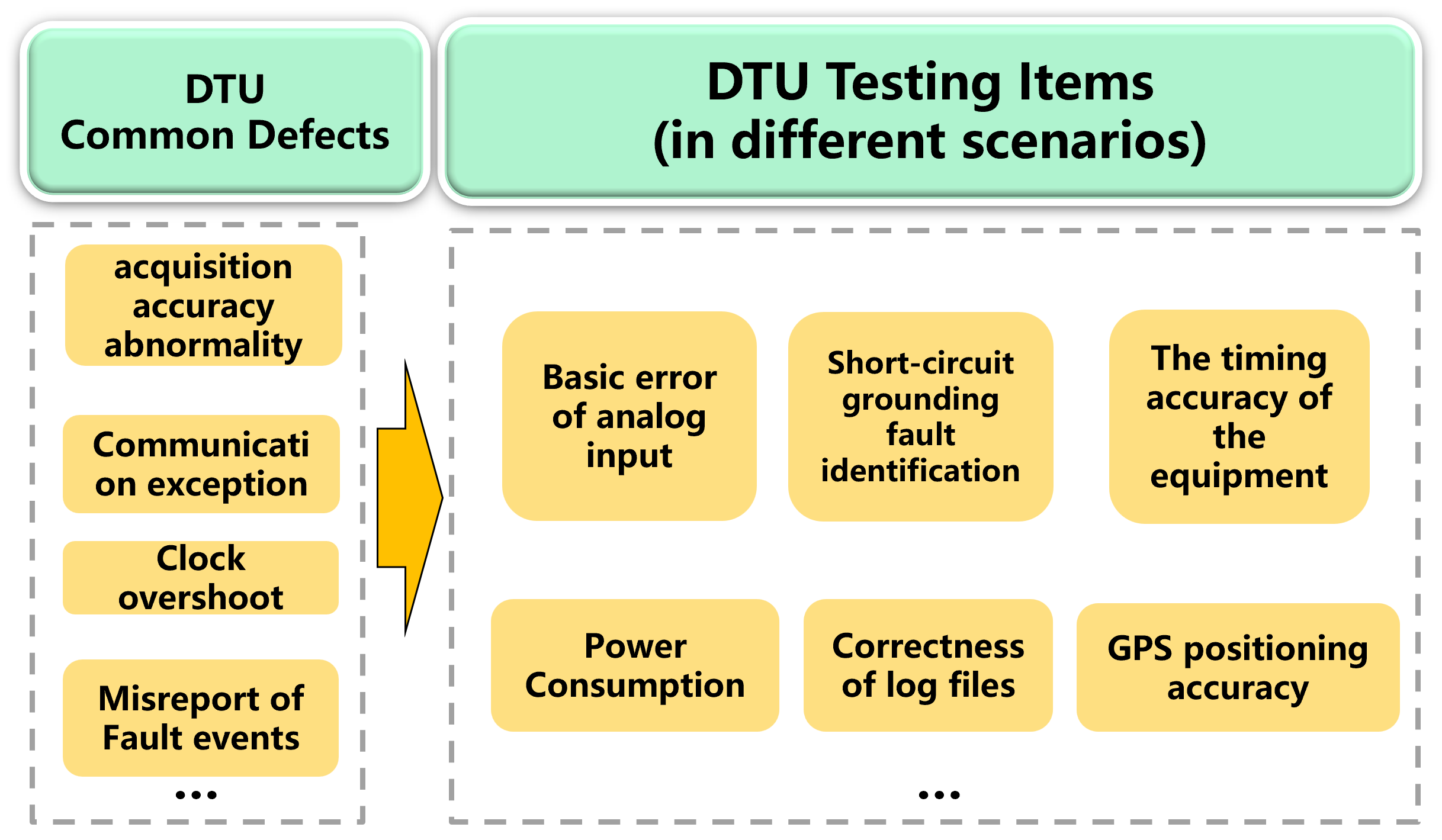
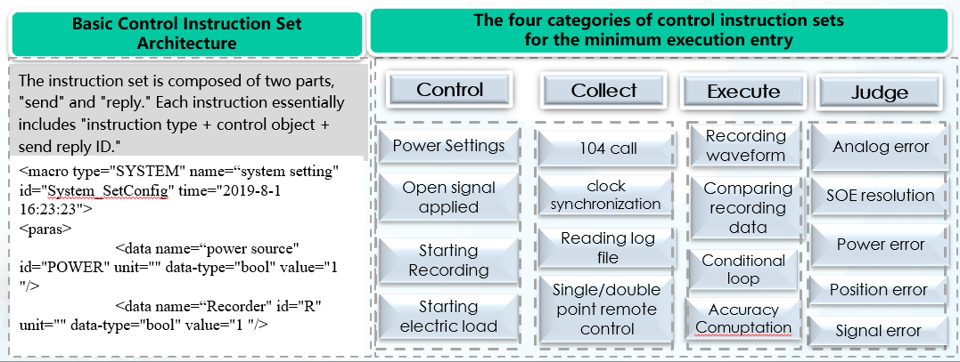
The test cases of the detection platform are generated by the compilation software designed by us. Based on the "ask-reply" communication interaction mechanism between the simulated master station and the hardware platform, a standardized compilation framework included 4 major categories of control instruction sets with a visualized minimum execution scale has been constructed. Through the flexible invocation of various types of instructions, users can achieve customized arrangement and secondary development of testing cases.
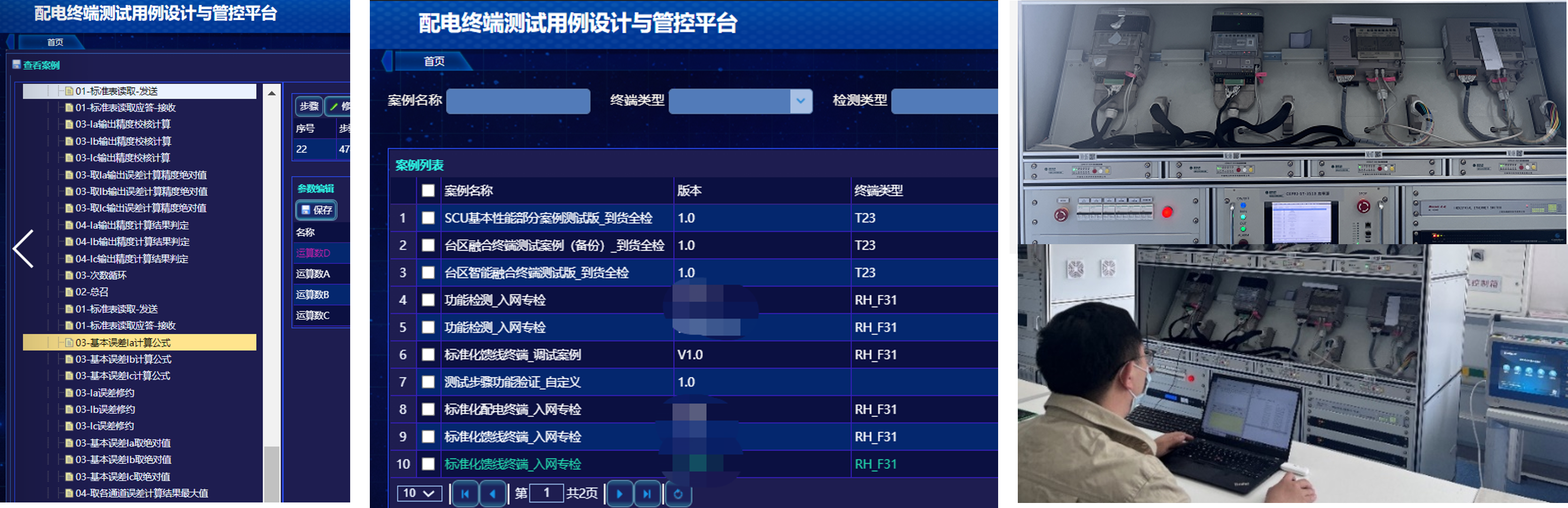
This is the compilation process for a DTU fault identification function test case. First, the user selects a case template for the DTU detection project from the compilation library. In the template, a project for testing the fault identification function is established, and related variables are configured. Typical projects include execution items such as "Start - Power Source Startup - DTU Reading Collection - Standard Meter Reading Collection - DTU Reading Error Calculation - DTU Alarm Status Judgment, etc".